Read Part 2: the aftermath.
Nothing beats a Friday night mistake. Professional sports leagues, the NFL among them, are famous for burying bad news in a Friday afternoon press release, betting it will be forgotten by Monday. Good Good and Callaway managed the opposite. On Friday, August 21, they published a self-inflicted wound, met it with a slow, weak response over the weekend, and watched it turn into a chaotic Monday, amplified on Tuesday when the PGA Tour itself weighed in. A Friday dump is built to make a story vanish. This one grew.
Both the wound and the failed first response were avoidable. That is what makes it worth taking apart.
The failure before the crisis
The ad depicted a man shoving a woman to the ground over a golf club. It was produced, approved, and published. That sequence is the first failure, and it is the one people skip past because the response drama is louder. Somewhere in the chain, a person with authority should have looked at a spot showing violence against a woman and said it does not go out. That review is the core of what a reputation owner does, whether the title is chief reputation officer, chief communications officer, or chief marketing officer. The first job is catching the self-inflicted wound before it is public, because the cheapest crisis is the one that never ships. It points to a weak leadership team or a broken company culture.
The failure after
Once the ad was out and the backlash was immediate, the response compounded the damage. Good Good apologized on the grounds that the content did not reflect its brand values, while, in the same window, its founder defended the full cut as a horror-movie spoof. Apologizing and justifying at once reads as neither, and outlets called the response contradictory. The people it most needed to convince were not convinced. The apology made things worse. The PGA Tour's CEO said publicly that the reaction was "a bit defensive and late", questioned the company's accountability, and described a scheduled Good Good event as a fluid situation. Callaway, the partner whose driver the ad was selling, distanced itself as well. A scripted apology did not contain the crisis; it widened it, because it did not read like a human being taking responsibility.
Read the room, then speak
After a self-inflicted wound, the only response that works is candid. Step back before publishing the statement, read what the audience is actually angry about, and answer that, plainly, without the templated values language every crisis apology now reuses. Say it like a person, not a brand. People can tell the difference between an organization that understands why they are upset and one that is running a script. A short, honest statement that named the harm and owned the decision would have done more than a polished paragraph that hedged.
Unexpected versus self-inflicted
The distinction matters because it tells you where the accountability sits. An unexpected crisis tests preparation: the plan, the trained spokesperson, the holding statement built in advance. A self-inflicted crisis tests judgment twice, once when someone approved the thing that should have been killed, and again when someone signed off on a response that read as evasive. A reputation function exists to win both tests, and this episode lost both.
The damage that outlives the news cycle
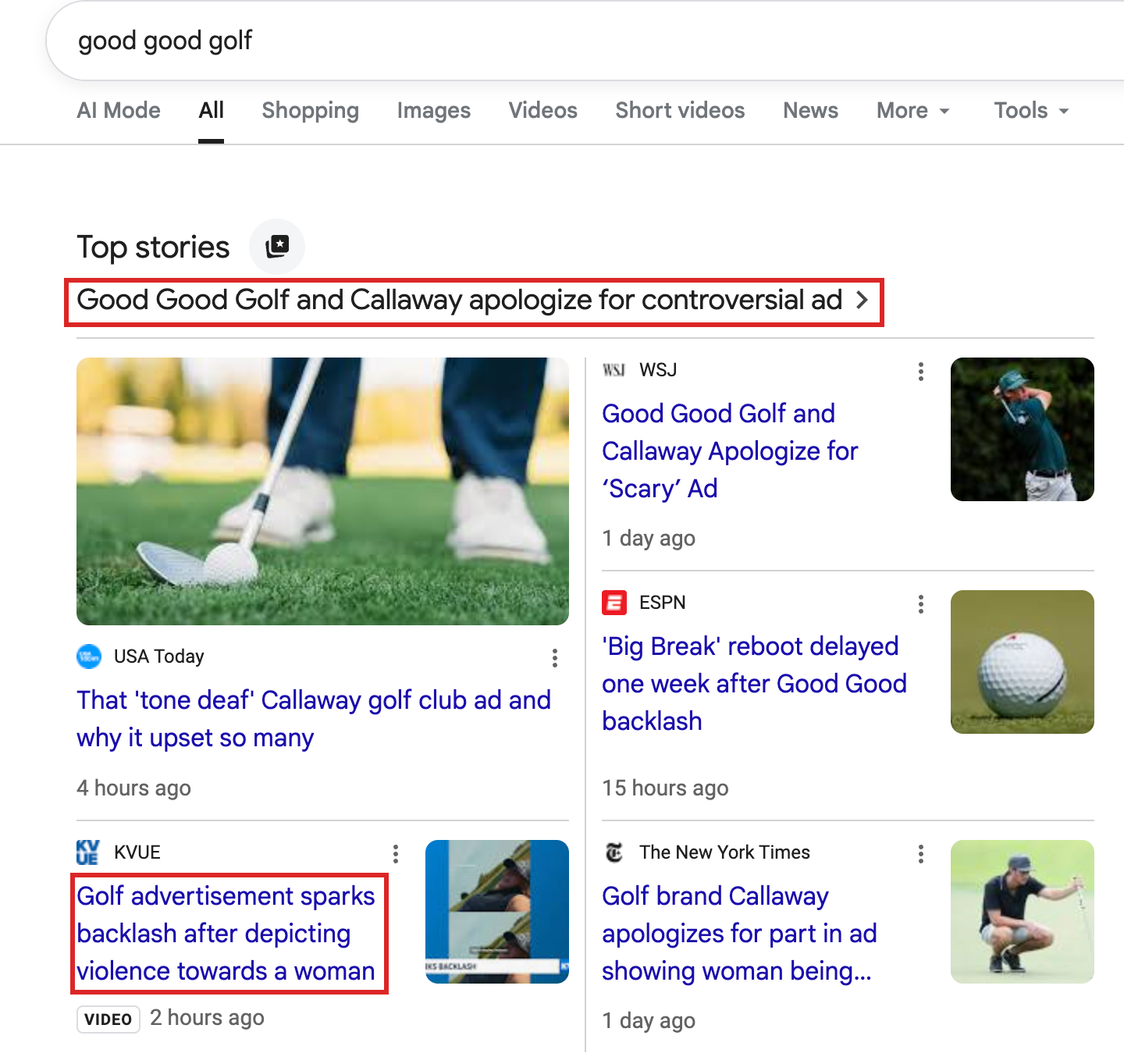
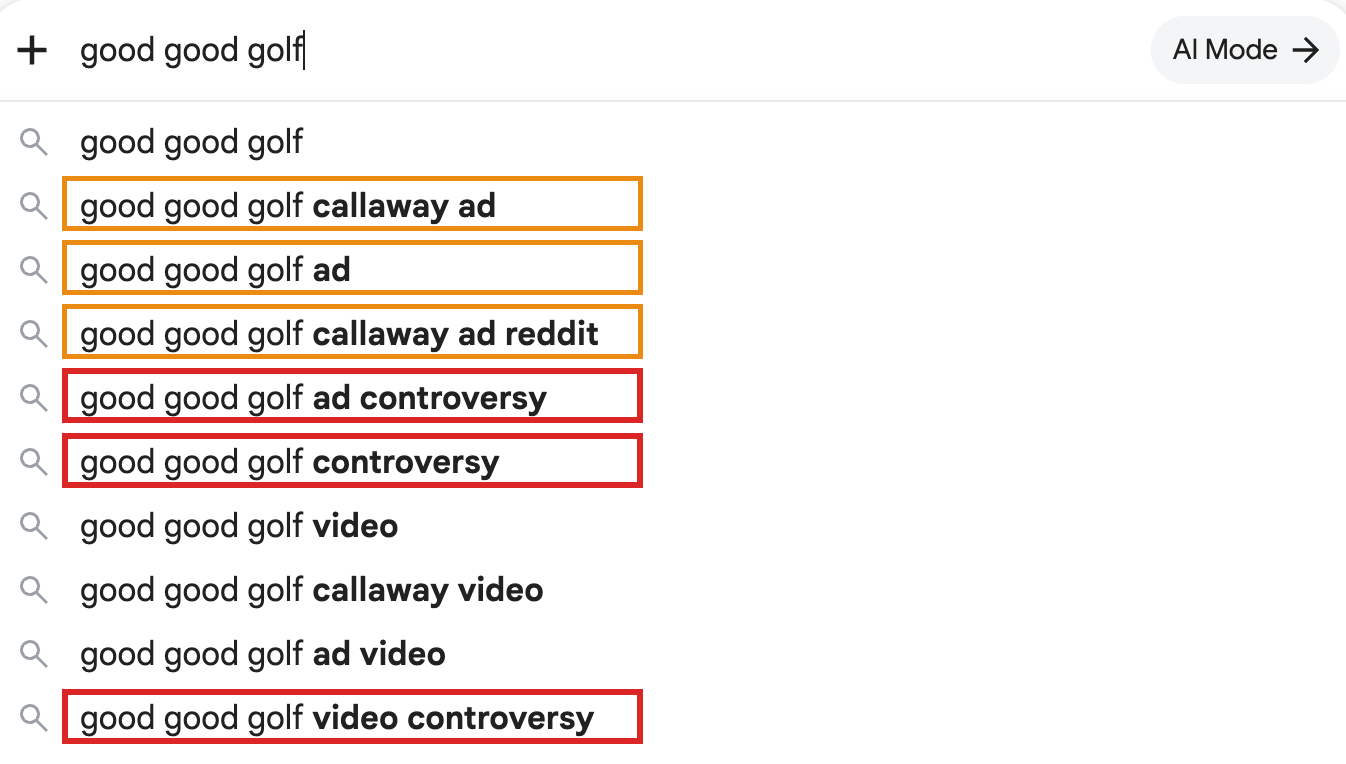
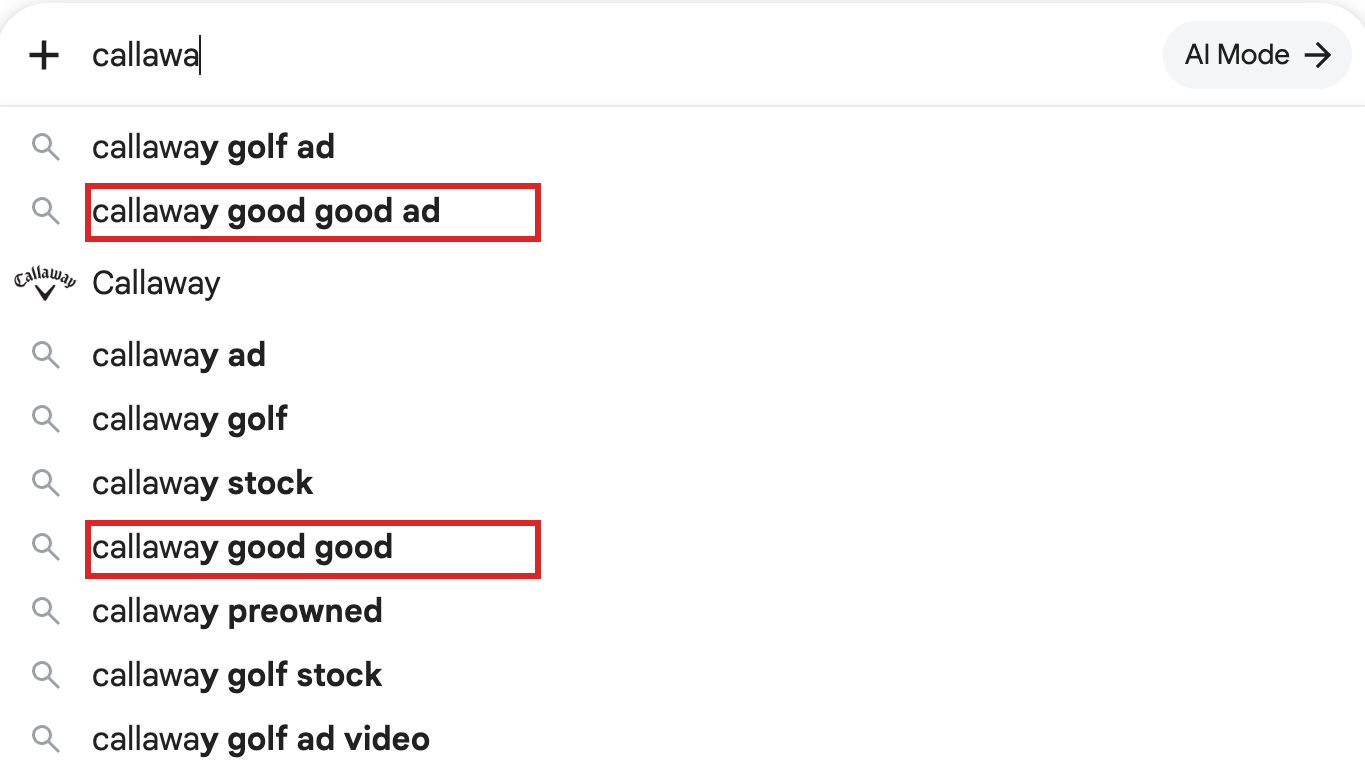
The visible damage moves on. Within a week or two the Top Stories carousel that greets the brand today refreshes, the partners issue their statements, and the news finds its next target. Something quieter gets planted during a controversy, and it does not move on. Search autocomplete learns from the surge of people typing the brand name next to "ad," "controversy," and "scary," and it keeps offering those completions long after the coverage fades. Type the brand now and its own name finishes with "controversy," three times over. Every customer, recruit, or partner who searches that name for the next year gets handed the worst week as a suggestion. It spreads, too: the partner whose logo was on the club starts autocompleting to the ad. The news has a short memory. Autocomplete has a long one. That gap is the cost a slow, defensive response keeps paying, and clearing it is active recovery work, not a matter of waiting the story out.
A fair word on where it stands
The situation is unresolved and still moving. The same PGA Tour executive noted the responses were improving, and a brand with millions of followers has the reach to recover if the next steps carry more candor than the first. The point of a breakdown is not to bury anyone mid-crisis. It is to mark, while it is fresh, how much of the cost was self-inflicted, and how much of it a single accountable owner could have prevented on either side of the publish button.
The lesson is small and old. Someone has to own reputation before the content goes out and after it goes wrong. That is the entire case for putting the job in one accountable seat. The alternative is what played out here: a preventable wound, a scripted response, and partners deciding in public whether the relationship is worth the trouble.
The frameworks this breakdown leans on live in the Crisis Communication pillar and The CRO Role. For the fast-response contrast, a brand that pulled its asset within the same news cycle, see The Converse Ad Drama and the Search Scar in the Balance.